Making Felt by Hand – Part 2
 With the netting still in place begin to gently rub the wool all over in a circular motion. Make sure that the net does not become attached to the wool. If there is too much pressure, the wool fibers will come up through the netting or the fibers will visibly move around.
 Carefully pull the netting away from the wool, keeping one hand next to the wool so that the fibers do not lose any connections. In the beginning of this stage, barely skim the fibers and gradually add pressure as the wool turns into felt. Once the first side has been worked for a while, flip the felt over and continue working on the other side. When the water gets cold, squeeze out the excess water and rewet the wool with hot water.
 To determine when the wool is to the soft-felt stage, try the pinch test. Pinch some of the fibers between your fingers and pull up. The wool should come up in one solid mass. If the fibers separate from each other in their individual layers, then rub some more.
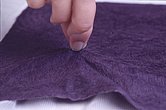 Once the wool has reached the soft-felt stage and passes the pinch test, it is time to go on to the next step, or if you need to finish it later, rinse the felt and set it aside to dry. When you are ready to continue the felting process, rewet with hot soapy water and proceed.
Palming
 Palming is a very important step in feltmaking, coming between the soft-felt stage and the hard-felt stage. Once the wool is holding together in a cohesive mass, hold the wool piece between your palms and rub back and forth. The palming action starts the fulling process and ensures that the fibers tangle tightly together. If shapes are cut, palm the edges so they will not stretch and be distorted.